


Leasing vs Buying a Car in Memphis, TN | Chuck Hutton Toyota

Leasing vs Buying a Car in Memphis, TN: How to Make the Right Choice

Most people walk into a dealership already leaning toward leasing or buying, but few have actually compared how each option plays out over time. Leasing a car means paying to use a vehicle for a set term, typically two to three years, then returning it. Buying means financing or paying for the full vehicle and owning it outright once the loan is complete. Both paths work, but the right one depends entirely on how you drive, how long you plan to keep the vehicle, and what matters most to your budget. For Memphis drivers weighing this decision, understanding the real trade-offs can save you from a choice you’ll second-guess later.

This guide covers the honest pros and cons of each option so you can walk into the conversation already knowing what questions to ask and which direction makes sense for your situation.

How Leasing and Buying Actually Work in Memphis, TN

Leasing and buying are fundamentally different financial arrangements, and the distinction matters more than most people realize. When you lease a Toyota® vehicle, you’re paying for the portion of the vehicle’s value that you use during your lease term. Your monthly payment covers the vehicle’s depreciation over that period, plus a financing charge. At the end of the lease, you return the vehicle or have the option to purchase it.

When you buy, you’re financing the entire vehicle. Monthly payments are typically higher, but every payment builds equity. Once the loan is paid off, you own the vehicle free and clear, with no further payments. That’s where long-term savings come in, especially for Memphis families who tend to keep their vehicles for several years. If you’re eyeing something like the Camry, known for its reliability and strong resale value, buying can be especially rewarding since the vehicle holds its worth well over time.

Did you know? Toyota vehicles consistently rank among the highest in resale value across the industry. That strong value retention benefits both buyers (who build more equity) and lessees (who often see more favorable lease terms as a result).

Pros and Cons of Leasing vs Buying for Memphis Drivers

Both leasing and buying have clear advantages, and neither is universally better than the other. The right choice depends on your priorities, driving habits, and financial goals. Here’s how they compare side by side.

Factor Leasing Buying
Monthly Payments Generally lower Generally higher during loan term
Ownership No ownership at end of term Full ownership after loan payoff
Mileage Annual limits, typically 10,000 to 15,000 miles No restrictions
Customization Must return vehicle in near-original condition Full freedom to modify and personalize
Long-Term Cost Higher if leasing continuously over many years Lower over time, especially after loan payoff
Newest Features Drive a new model every 2 to 3 years Keep the same vehicle unless you trade or sell

Leasing Strengths

  • Lower monthly payments free up cash flow
  • Drive a new vehicle with updated safety and tech every few years
  • No concern about resale or trade-in when the term ends
  • Flexibility to switch to a different model at lease end

Buying Strengths

  • Build equity with every payment you make
  • No mileage restrictions for long Memphis commutes
  • Freedom to customize your vehicle however you want
  • No monthly payments once the loan is complete

Here’s the honest take: if you plan to keep a vehicle for five years or longer, buying almost always costs less over time. But if lower monthly payments and driving a new vehicle every few years are your priorities, leasing is a legitimate path that works well for plenty of drivers. Neither option is wrong. It just has to match how you actually live.

Key Factors Memphis and Southaven Drivers Should Consider

Your annual mileage is one of the most important factors in this decision. Lease contracts typically cap annual driving at 10,000 to 15,000 miles. Going over that limit means paying a per-mile fee when you return the vehicle, and those charges add up quickly. If you’re commuting daily on I-55 from Southaven into Memphis, or driving regularly along I-240 for work, those miles accumulate faster than you might expect. Drivers who put on significant mileage are generally better served by buying.

Questions to Ask Yourself Before Deciding

  • How many miles do I drive in a typical year?
  • Do I plan to keep this vehicle for more than three years?
  • Is having the latest safety technology and features important to me?
  • Do I want to customize my vehicle with accessories or modifications?
  • What monthly payment fits comfortably within my budget?
  • Do I use my vehicle for work that causes extra wear?

Another factor worth considering is how you treat your vehicles. Leases require you to return the car in good condition, minus normal wear and tear. If you have kids, pets, or a job that takes a toll on your truck’s bed or interior, buying gives you the freedom to use your vehicle without worrying about end-of-term condition charges. For families looking at something like the RAV4 as a daily driver and weekend adventure vehicle, buying often makes more sense when everyday life naturally creates wear.

Pro tip: If you’re unsure about your annual mileage, check your current vehicle’s odometer against how long you’ve owned it. Dividing total miles by years of ownership gives you a realistic average that helps determine whether a lease’s mileage cap will work for your driving habits.

Making a Confident Decision at the Dealership

The best way to approach the lease-versus-buy conversation is to walk in with a clear understanding of your priorities, not to figure them out under pressure at a desk. Knowing your budget range, your typical annual mileage, and how long you plan to keep the vehicle puts you in control of the conversation.

1
Understand your driving patterns Calculate your annual mileage honestly. Memphis commuters driving from areas like Olive Branch or across Shelby County often underestimate how quickly miles add up.
2
Define your ownership timeline If you like changing vehicles every two to three years, leasing keeps things simple. If you prefer to drive a vehicle for five or more years, buying is usually the more economical path.
3
Explore your financing options early Getting a sense of your options before you visit helps you compare lease and purchase terms with clarity. You can apply for financing online to start that process at your own pace.
4
Talk through your specific situation with an expert A knowledgeable finance team can walk you through how both options look based on the vehicle you’re interested in and your individual circumstances.

Something worth mentioning: Toyota’s strong reputation for reliability and value retention works in your favor regardless of which path you choose. Buyers benefit from vehicles that last well beyond the loan term with proper maintenance. Lessees benefit from terms that often reflect that same strong residual value. Browsing the new inventory can help you narrow down which model you’re considering before you make the lease-or-buy decision.

Did you know? According to Kelley Blue Book, Toyota has consistently been recognized as one of the top brands for resale value. That means whether you lease or buy, you’re starting from a strong position financially.

Common Questions About Leasing vs Buying a Car in Memphis, TN

Is it better to lease or buy a Toyota in Memphis, TN?

The better option depends on your driving habits, budget, and how long you plan to keep the vehicle. Leasing offers lower monthly payments and the ability to drive a new Toyota every few years. Buying builds equity over time and costs less in the long run, especially if you keep the vehicle after the loan is paid off.

What are the mileage limits on a car lease?

Most lease contracts set annual mileage limits between 10,000 and 15,000 miles. If you exceed the limit, you’ll pay a per-mile fee at the end of the lease. Memphis-area drivers with longer commutes from Southaven or Olive Branch should calculate their annual mileage carefully before signing a lease agreement.

Can I buy my Toyota at the end of a lease?

Yes, most Toyota lease agreements include an option to purchase the vehicle at the end of the lease term for its residual value. This can be a smart choice if you’ve enjoyed the vehicle and want to continue driving it without starting a new lease or financing a different car.

Where can I compare leasing and buying options near Memphis, TN?

Chuck Hutton Toyota at 4601 Hutton Way in Memphis, TN offers both leasing and financing options. The finance team can walk you through both paths based on the specific Toyota model you’re interested in, helping drivers from Memphis, Southaven, and Olive Branch find the arrangement that fits their budget and lifestyle.

Your Next Vehicle Starts with the Right Plan

Whether you lease or buy, the goal is the same: getting into a vehicle that fits your life without financial stress. If you value flexibility and lower monthly payments, leasing is a solid path. If long-term savings and full ownership matter more, buying is the way to go. Either way, starting with the right information puts you in control.

The finance team at Chuck Hutton Toyota on Hutton Way in Memphis is ready to walk you through both options side by side, with no pressure and full transparency, so you can make the choice that’s right for you.
Beginner’s Guide to Towing: What Can a Toyota Tacoma or Tundra Really Pull in Memphis, TN?

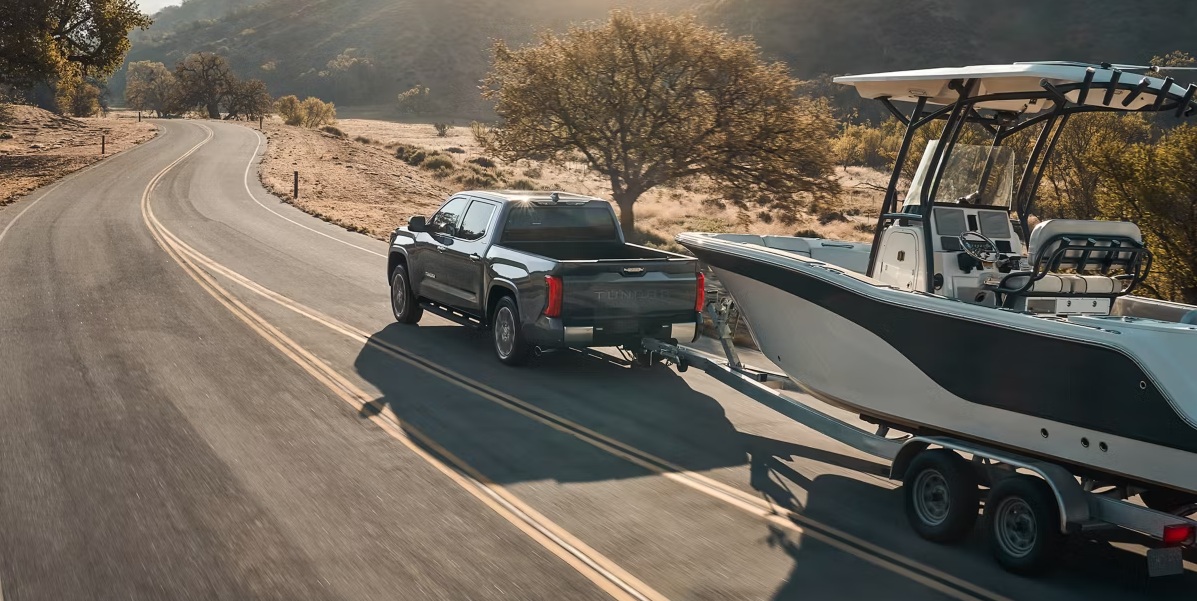
The Toyota® Tacoma can tow up to 6,500 pounds when properly equipped, while the Toyota Tundra reaches up to 12,000 pounds with the right configuration. These numbers matter, but what do they actually mean for your weekend plans or work needs? For Memphis drivers new to towing, understanding capacity is just the starting point.

Whether you’re planning to pull a fishing boat to Pickwick Lake, haul a camper for a family trip, or transport equipment for work around the I-40 corridor, choosing between these two trucks comes down to matching capability to your specific situation. We’ve helped plenty of first-time towers from Memphis, Southaven, and Olive Branch figure out exactly what they need, and the answer isn’t always the bigger truck.

Understanding Towing Capacity: What the Numbers Actually Mean

Towing capacity refers to the maximum weight a vehicle can safely pull when properly equipped. This number varies significantly based on engine choice, drivetrain configuration, cab style, and bed length. The figure advertised by manufacturers assumes optimal conditions and specific equipment packages.

Here’s something many first-time towers don’t realize: that maximum towing number typically assumes you’re carrying only a driver. Add passengers, gear in the bed, and cargo inside the cab, and your effective towing capacity decreases. A safe rule of thumb is to stay at or below 80% of your truck’s maximum rated capacity for comfortable, controlled towing.

The 2025 Tacoma offers towing ratings between 3,500 and 6,500 pounds depending on trim and powertrain. The base SR with a 4-cylinder reaches 3,500 pounds, while the SR5 and TRD trims with the i-FORCE turbocharged engine can hit the 6,500-pound maximum. The i-FORCE MAX hybrid powertrain tops out at 6,000 pounds. Browse the new Toyota inventory to see which configurations are currently available.

Tacoma vs Tundra: Matching the Truck to Your Memphis Towing Needs

Choosing between these trucks depends on what you plan to tow regularly and how that fits into your daily driving. Both are capable, but they serve different purposes.

What You’re Towing

Typical Weight

Best Match

Jet skis or small utility trailer

1,500 to 3,000 lbs

Tacoma (any trim)

Bass boat or mid-size camper

3,500 to 5,500 lbs

Tacoma with tow package

Large boat or travel trailer

6,000 to 8,000 lbs

Tundra

Horse trailer or heavy equipment

8,000 to 12,000 lbs

Tundra with tow package

The Tacoma makes sense for drivers who tow occasionally and want a truck that’s also nimble for daily commuting through Memphis traffic. The Tundra is the choice when you’re consistently pulling heavier loads or need the full-size capability for work. Consider your financing options early to understand what fits your budget across both lineups.

Tongue Weight and Load Balance: The Safety Basics for Memphis Roads

Tongue weight is the downward force your trailer’s coupler exerts on your truck’s hitch ball. Getting this right matters more than most beginners realize, especially when navigating the hills and curves along I-240 or heading through the I-40/I-240 interchange.

Proper tongue weight should fall between 10% and 15% of your total loaded trailer weight. If you’re towing a 5,000-pound boat and trailer combination, the tongue weight should be approximately 500 to 750 pounds. Too little tongue weight causes trailer sway at highway speeds. Too much overloads your rear axle and compromises steering and braking.

đź’ˇ Did you know? The 2025 Toyota Tacoma and Tundra both offer available Trailer Backup Guide with Straight Path Assist, which uses your truck’s camera system to help you reverse a trailer in a straight line. This feature alone has saved countless new towers from frustration at boat ramps and campsites.

Memphis summers regularly push into the mid-90s with high humidity. Hot weather affects towing performance, as engines work harder to cool themselves while pulling weight. Both the Tacoma and Tundra are engineered to handle these conditions, but proper maintenance becomes even more important. Keep your service schedule current, especially transmission and cooling system checks before towing season.

Essential Towing Features on the 2025 Tacoma and Tundra

Modern towing technology makes pulling a trailer safer and less stressful than ever, particularly for beginners still building confidence.

Both trucks offer Trailer Sway Control as a standard feature. This system detects when a trailer begins to oscillate and automatically applies individual wheel brakes and reduces engine power to bring everything back in line. It’s a safety net that works without driver input.

The Tundra includes an Integrated Trailer Brake Controller on most trims, which coordinates your truck’s brakes with electric trailer brakes for smoother, more controlled stops. The Tacoma offers this as an available feature. Both trucks provide TOW/HAUL drive modes that adjust transmission shift points and throttle response for better performance under load.

đź’ˇ Pro tip: Before your first towing trip, practice reversing with your trailer in an empty parking lot. The steering inputs feel backward at first, and building muscle memory in a low-pressure environment prevents embarrassment at the campground or boat launch.

If you’re interested in seeing these features in action, schedule a test drive and ask about towing demonstrations.

Common Questions About Toyota Truck Towing Capacity

What is the maximum towing capacity of the 2025 Toyota Tacoma?

The 2025 Toyota Tacoma can tow up to 6,500 pounds when properly equipped with the i-FORCE 2.4-liter turbocharged engine, specific cab and bed configurations, and the available tow package. The i-FORCE MAX hybrid powertrain reaches a maximum of 6,000 pounds. Base models with the standard engine start at 3,500 pounds.

Can a Toyota Tacoma tow a camper?

Yes, a properly equipped Toyota Tacoma can tow many popular camper styles including teardrop trailers, pop-up campers, and smaller travel trailers. For campers weighing under 5,000 pounds, the Tacoma handles the job well. Larger travel trailers exceeding 6,000 pounds require the Tundra for safe, comfortable towing.

How much can a 2025 Toyota Tundra tow near Memphis?

The 2025 Toyota Tundra offers a maximum towing capacity of 12,000 pounds when configured with the i-FORCE 3.4-liter twin-turbo V6 engine, rear-wheel drive, and the available tow package. The i-FORCE MAX hybrid models tow up to 11,450 pounds. Even the base SR trim can handle 8,300 pounds.

Do I need a special license to tow a trailer in Tennessee?

Most recreational towing in Tennessee requires only a standard driver’s license. A non-commercial Class A license may be required if the combined weight of your truck and trailer exceeds 26,000 pounds, which is rare for typical boat and camper towing. Always verify current Tennessee DMV requirements before towing.

Find the Right Towing Truck for Your Adventures

The right truck for towing depends on what you’re pulling, how often you’re pulling it, and what else you need the vehicle to do. The Tacoma delivers capable mid-size towing with daily-driver practicality. The Tundra provides full-size muscle for heavier loads and demanding work.

If you’re ready to explore which Toyota truck fits your towing needs, the team at Chuck Hutton Toyota can walk you through the options and help you understand exactly what each configuration can handle. Bring your questions about what you plan to tow, and we’ll help you make a confident choice.

Explore Toyota Trucks

Schedule a Test Drive

Trade-In Secrets: How to Get Maximum Value for Your Car in Memphis, TN

Your trade-in could be worth hundreds more than you think, but only if you know what dealerships actually look for during an appraisal. Trade-in value in Memphis represents the amount a dealership will credit toward your next vehicle purchase based on your current car’s condition, market demand, and presentation. Most drivers leave money on the table simply because they don’t prepare properly before driving onto the lot.

Here’s something worth knowing: Tennessee allows you to deduct your trade-in value from the purchase price before calculating sales tax. That means a higher trade-in doesn’t just reduce what you owe on your next vehicle, it also lowers your tax bill. We’ve put together the strategies that consistently help our customers in Memphis and surrounding areas like Southaven and Olive Branch get the most from their current vehicles.

What Type of Trade-In Customer Are You?

Maximizing your trade-in value starts with understanding your specific situation and goals. Not every approach works equally well for every driver, and knowing where you stand helps you focus on the strategies that matter most for your circumstances.

If you’re planning ahead with a few weeks before your next purchase, you have time to address minor repairs, gather documentation, and get multiple appraisals. This is the ideal position, and it typically yields the strongest offers. Drivers commuting from Olive Branch or along I-240 often plan their trade-ins around upcoming model year changes or seasonal demand shifts.

If you need to move quickly, focus on presentation and documentation rather than repairs. A clean vehicle with organized service records can still command a strong offer, even without time for additional preparation. The key is maximizing what you can control in a shorter timeframe.

If you’re still making payments on your current vehicle, the trade-in process works differently. Your payoff amount gets factored into the equation, and understanding whether you have positive or negative equity changes your strategy. Explore your financing options early to understand how your trade-in fits into the bigger picture.

Preparation Steps That Actually Increase Your Memphis Trade-In Offer

A well-prepared vehicle signals to appraisers that it’s been cared for and will require minimal reconditioning before resale. This perception directly influences the offer you receive, often more than you might expect.

Preparation Step

Why It Matters

Best For

Deep interior and exterior cleaning

Creates immediate positive impression and suggests overall care

Every trade-in situation

Gather all maintenance records

Documents consistent care and builds appraiser confidence

Vehicles with regular service history

Fix minor cosmetic issues

Eliminates easy deductions from your offer

Those with time to prepare

Research your vehicle’s current market value

Gives you a realistic baseline for negotiations

Every trade-in situation

Browse the new Toyota® inventory while preparing your trade-in so you can negotiate both transactions with clear priorities in mind.

How Memphis Weather and Driving Conditions Affect Your Trade-In

Local factors play a real role in how your vehicle is evaluated and what it’s worth on the Memphis market. Understanding these regional considerations helps you present your vehicle in the best possible light.

Memphis summers regularly push temperatures into the mid-90s with significant humidity. Vehicles with well-maintained air conditioning systems and intact interior surfaces command better offers because appraisers know these features matter to local buyers. Check that your A/C blows cold and address any dashboard cracks or faded upholstery before your appraisal.

The stop-and-go traffic along I-40 and the I-240 loop puts extra wear on brakes and transmissions. If you commute daily through high-traffic corridors, having documentation of regular brake inspections and transmission services adds credibility to your vehicle’s condition claims. Even if your brakes are within spec, proof of recent inspection removes doubt.

đź’ˇ Did you know? Tennessee’s 7% state sales tax applies only to the difference between your new vehicle’s price and your trade-in value. On a trade-in worth several thousand dollars, this can save you hundreds in taxes that you’d pay if you sold privately and bought separately.

Keep your vehicle’s service records current through the appraisal process, as recent maintenance documentation demonstrates ongoing care.

Timing and Negotiation Strategies That Work

When you trade in and how you approach the conversation both influence your final offer. These aren’t secrets dealerships hide, they’re simply factors that many drivers don’t consider.

Market demand fluctuates throughout the year. SUVs and trucks typically see stronger demand in spring when families prepare for summer activities, while fuel-efficient sedans may perform better when gas prices climb. Trading during peak demand for your vehicle type often yields better offers because dealerships can resell quickly with less holding cost.

Separate your trade-in negotiation from your new vehicle purchase mentally, even if they happen in the same conversation. Know what your current vehicle is worth before discussing the new one. Online valuation tools provide estimates, but remember that actual trade-in values depend on condition, local demand, and current inventory needs.

đź’ˇ Did you know? Getting your trade-in appraised before you start shopping gives you negotiating clarity. Use the Value Your Trade tool to establish a baseline, then focus on maximizing that number through preparation and presentation.

Common Questions About Trade-In Value in Memphis

What documents do I need to bring when trading in my car?

Bring your vehicle title or loan payoff information, current registration, all available keys and remotes, and any maintenance records you have. Having these ready speeds up the appraisal process and demonstrates organization, which positively influences how appraisers view your vehicle’s overall care.

Can I trade in a car that I still owe money on?

Yes, you can trade in a financed vehicle. If your trade-in value exceeds your loan balance, that positive equity applies toward your next purchase. If you owe more than the vehicle is worth, the negative equity can often be rolled into your new loan, though this increases your monthly payment.

How does trading in my car in Memphis reduce my sales tax?

Tennessee calculates sales tax on the difference between your new vehicle’s price and your trade-in value. If you purchase a vehicle and trade in one worth several thousand dollars, you only pay the 7% state tax plus local taxes on the remaining amount after the trade-in credit is applied.

Should I fix mechanical problems before trading in my car?

Minor issues like burned-out bulbs, worn wipers, or low tire pressure are worth addressing because they cost little but improve perception. Major mechanical repairs rarely return their full cost in trade-in value. Be honest about known issues during appraisal, as transparency builds trust and avoids complications.

Your Next Step Toward a Fair Trade-In Value

Getting maximum value from your trade-in comes down to preparation, timing, and working with a team that evaluates vehicles fairly. When your vehicle is clean, documented, and presented honestly, you’re positioned for the strongest possible offer.

If you’re ready to see what your current vehicle is worth and explore your options for something new, the team at Chuck Hutton Toyota is here to walk you through the process without pressure. Whether you’re upgrading for more space, better fuel efficiency, or simply ready for something different, your trade-in is the first step toward driving away with confidence.

Get Your Trade-In Value

Schedule a Test Drive

Seat count matters, but it’s not the whole story. The real question is: what does your family actually do on a regular Tuesday?

Maybe you’re hauling soccer gear to Mike Rose Soccer Complex every weekend. Maybe you’re loading up for Shelby Farms with bikes and a cooler. Or maybe you just need room for two car seats and groceries. Let’s match a Toyota to how your family actually lives.

Three Questions Before You Shop

How many people ride regularly? Not holiday-dinner capacity—typical weekday numbers.

What do you carry? Sports equipment, strollers, the dog? Cargo space behind the last row matters more than you’d think.

How far do you drive? Commuting on I-240 daily? Fuel economy adds up fast.

Fun fact: The average American family spends about 300 hours per year in the car. That’s almost 13 full days. Comfort isn’t optional.

Couples and Small Families (2-4 People)

You don’t need a giant SUV. You need something efficient that still handles weekend trips to the Memphis Zoo or Pickwick Lake.

Toyota RAV4: Five seats, 37.6 cubic feet of cargo (69.8 with seats folded). The hybrid gets around 40 MPG combined. Fits two car seats comfortably with room for strollers.

Toyota Camry: Don’t overlook a sedan. Surprisingly roomy trunk, and the hybrid gets over 50 MPG. If you’re not hauling bikes every weekend, you’ll appreciate the easier parking at Overton Square.

Growing Families (4-6 People)

Three kids, or two plus a grandparent who rides along? Now you’re looking at three rows.

Toyota Highlander: Seats up to eight. About 84 cubic feet total cargo. The hybrid gets 35 MPG—impressive for a three-row SUV. Third row works great for kids; adults can manage shorter trips.

Toyota Grand Highlander: Same concept, more legroom everywhere. Up to 97.5 cubic feet of cargo with seats folded. If you’re running carpools or loading up for Meeman-Shelby Forest, this extra space shows.

Pro tip: Check cargo space behind the third row, not just maximum capacity. You need room with everyone still in the vehicle.

Large Families (6+ People)

When you’re moving a crew and all their stuff, minivans make sense.

Toyota Sienna: Seven or eight seats. 101 cubic feet of cargo with seats folded. Here’s the thing: the Sienna is hybrid-only and gets 36 MPG combined—better than most compact cars. Sliding doors make loading kids in tight parking lots (Wolfchase Galleria, anyone?) much easier.

Fun fact: The Sienna has up to five LATCH positions for car seats. If you’ve tried fitting three car seats across, you know why that matters.

Lifestyle Matters Too

Road trip families: Prioritize comfort and fuel economy. The Sienna’s rear entertainment system keeps kids occupied for hours. The Grand Highlander Hybrid gives you 34 MPG on those I-55 drives to the Gulf Coast.

Outdoor adventurers: Loading bikes for the Big River Crossing trail? Check cargo space with seats up, not just folded flat.

Budget-focused: A Sienna at 36 MPG saves thousands over five years compared to a traditional SUV averaging 20 MPG. Calculate total cost, not just sticker price.

Test drive tip: Bring your actual stuff—car seats, sports bags, whatever you carry regularly. See how it fits before you commit.

Find Your Family’s Fit

Numbers only tell you so much. The team at Chuck Hutton Toyota can help you figure out which Toyota matches how your family lives.

Browse the new Toyota inventory or check out certified pre-owned options for great value on recent models.

Schedule a test drive and bring the whole crew. We’ll make sure everyone fits—people and cargo included.

Already driving a Toyota? Schedule service online.

Getting a car seat installed correctly is one of those things that seems straightforward until you actually try it. According to NHTSA, nearly half of all car seats have some kind of installation error. The good news? Most mistakes are easy to fix once you know what to look for.

We talk to new parents at Chuck Hutton Toyota all the time about these questions. Whether you’re in Memphis, Southaven, or Olive Branch, here’s a practical guide to help you get it right.

Two Quick Tests That Tell You Everything

You don’t need to memorize a long manual. These two simple tests take about 30 seconds and let you know if your installation is solid.

The Pinch Test

Once your child is buckled in and the harness is tightened, try to pinch the strap at their shoulder. If you can grab a fold of material between your fingers, it’s too loose. When it’s right, the straps lie flat and you won’t be able to pinch any extra webbing. It might look snug to you, but this is how it’s designed to work.

The Inch Test

Grab the car seat where the belt or LATCH connects and try to move it side to side and front to back. It shouldn’t move more than an inch in any direction. It’s a good idea to check this every few weeks since regular use can loosen things up over time.

Understanding the LATCH System

LATCH stands for Lower Anchors and Tethers for Children. It’s been standard in vehicles since 2002 and is designed to make installation simpler than using seat belts alone.

Lower anchors are metal bars located in the crease of the seat. Your car seat clips directly onto them. Tether anchors are located behind the seat, and you connect the strap from forward-facing seats there to keep everything secure.

Good to know: LATCH has a weight limit. Once your child plus the car seat together weigh more than 65 pounds, you’ll need to switch to installing with the seat belt instead. The seat belt works just as well when installed correctly. Check your Toyota’s owner manual to find where your specific anchors are located.

Tennessee Car Seat Requirements

Tennessee was the first state in the country to pass car seat laws back in 1977. Here’s a quick summary of current requirements:

Under 1 year old or 20 pounds or less: Rear-facing car seat in the back seat

Ages 1 to 3, over 20 pounds: Car seat in the back seat

Ages 4 to 8, under 4’9″: Booster seat in the back seat

Ages 9 to 12, 4’9″ or taller: Seat belt required, back seat recommended

These are the legal minimums. Many pediatricians recommend keeping children rear-facing until age 2 or until they reach the seat’s height and weight limits.

Common Mistakes and How to Fix Them

Recline angle is off: Newborns need enough recline so their head stays supported. Most seats have a level indicator on the side to help you get the right angle.

Chest clip position: The chest clip should sit at armpit level, not up near the neck or down on the belly. It keeps the straps positioned correctly on the shoulders.

Harness straps at wrong height: For rear-facing seats, straps should be at or below the shoulders. For forward-facing, they should be at or above the shoulders. Most seats have multiple slots so you can adjust as your child grows.

Using LATCH and seat belt together: Use one or the other, not both. Using both at the same time can actually make the installation less secure. The exception is certain booster seats designed to use both.

Free Car Seat Inspections in Memphis

One of the best things you can do is get your installation checked by a certified technician. It usually takes about 20 minutes and it’s free.

In the Memphis area, Le Bonheur Children’s Hospital offers inspections through their Safe Kids Mid-South program. The Shelby County Health Department also offers checks by appointment, and several Memphis Police Department stations have certified technicians available. You can search NHTSA.gov with your zip code to find the closest location.

Which Toyotas Work Best for Car Seats?

If you’re shopping with a family in mind, here’s how some popular Toyota models handle car seat installations:

The Toyota Sienna offers the most flexibility. The 8-passenger version with the second-row bench seat can fit three car seats across the middle row, with up to five LATCH positions across two rows. The hybrid powertrain also means good fuel economy for all those daily trips.

The Toyota Grand Highlander has three rows with more space than the standard Highlander. The second-row anchors are easy to access, and there’s solid legroom for whoever is doing the buckling. A good option for families with two or three kids at different stages.

The Toyota Highlander handles two car seats nicely in the second row with accessible anchors and tethers. Works well for families who want some third-row flexibility without the size of a minivan.

The Toyota RAV4 fits two car seats comfortably with good front-passenger legroom even when rear-facing seats are installed. A practical choice for families with one or two children.

See these models in person at the new Toyota inventory.

We’re Here to Help

Choosing a family vehicle is a big decision, and we know it goes beyond specs and features. The team at Chuck Hutton Toyota is happy to let you test car seat installations during your visit. Feel free to bring your seats and see how they fit.

Ready to take a look? Schedule a test drive and we’ll have a vehicle ready. You can also browse the certified pre-owned inventory for budget-friendly options with the same Toyota reliability.

Already driving a Toyota? Our service team can check your LATCH anchors and tether points to make sure everything is working properly. Schedule a service appointment at your convenience.

Congratulations on your growing family!

Chuck Hutton Toyota has a fantastic way to explore the Bluff City and beyond. Ever dreamed of cruising around in a sleek, new Toyota Camry XSE? Well, dream no more! You can rent one from us!

Unforgettable Memphis Adventures Start Here

Whether you’re a local resident looking for a weekend getaway car or a visitor experiencing Memphis for the first time, the Camry XSE is your perfect ride. With its luxurious interior, smooth handling, and top-notch safety features, this car will make every mile enjoyable.

Hit the Road with Peace of Mind

Here’s what makes renting from me a breeze:

  • Unbeatable Rates: Get behind the wheel of a brand new Camry XSE for as low as $89 a day or $559 for a week-long adventure.
  • Unlimited Miles: Explore Memphis and its surroundings freely without worrying about mileage charges. Hit Graceland, venture down Beale Street, or take a scenic drive along Highway 61 – the possibilities are endless!
  • Stress-Free Experience: Our rental process is simple and straightforward. You’ll be cruising in your dream car in no time.

Interested? Let’s Get You Rolling!

For more information or to book your rental today, just give us a call or book here. Let’s make your Memphis trip unforgettable!

P.S. Looking for something a little different? Feel free to reach out and inquire about other rental options.

P.P.S. Spread the word! Share this post with your friends and family who might be interested in renting a car in Memphis.