

Toyota Safety Sense 3.0 vs. 2.5: What Memphis Buyers Need to Know Before Choosing a 2024 or 2025-202
Toyota Safety Sense 3.0 is a real upgrade over Toyota Safety Sense 2.5, but it should not be the only reason you choose a 2025-2026 Toyota over a 2024. Toyota's own materials show that TSS 2.5 was already a strong active-safety suite, while TSS 3.0 mainly improves sensing hardware, object detection, intersection coverage, and adds features like Proactive Driving Assist on certain vehicles.
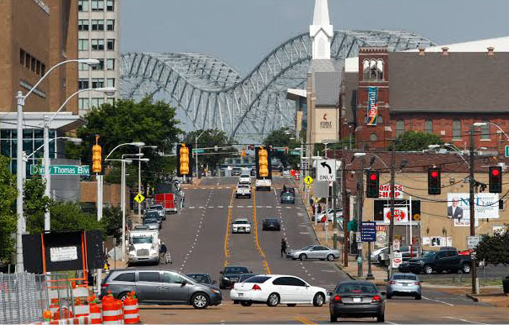
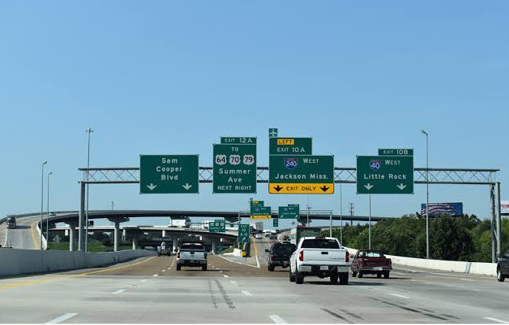
That difference matters more in Memphis than it does in a generic national article. Poplar Avenue from Highland Street to I-240 is a seven-lane principal arterial with sidewalks, the Shelby Farms Greenline is a 12.94-mile paved urban trail connecting Midtown Memphis through Shelby Farms Park to Cordova, and the I-240/Airways interchange near Memphis International Airport carries heavy commuter, airport, and truck traffic. Those are exactly the kinds of places where better intersection and object recognition can feel more relevant.
At Chuck Hutton Toyota, you can compare Toyota model years side by side instead of assuming every 2025 or 2026 Toyota automatically got the newest safety suite. This page explains what TSS 2.5 already did well, what TSS 3.0 actually changed, which Toyotas use each version, and when a late-model Toyota with TSS 2.5 still makes complete sense for drivers in Memphis, Southaven, and Olive Branch.
What Toyota Safety Sense 2.5 Already Did Well
Toyota Safety Sense 2.5 already paired six core systems with intersection support and emergency steering assist.
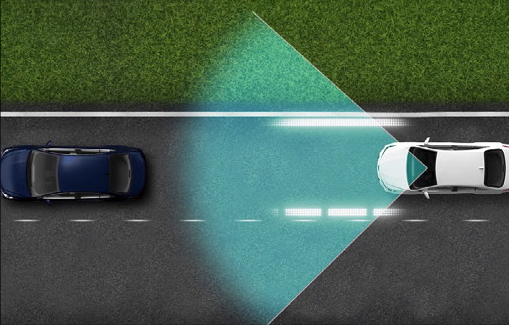
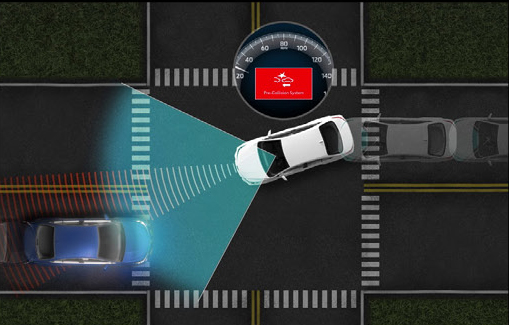
TSS 2.5 was already a serious safety suite before TSS 3.0 arrived. Toyota says TSS 2.5 and 2.5+ already bundled Pre-Collision System with Pedestrian Detection, Lane Departure Alert with Steering Assist, Lane Tracing Assist, Dynamic Radar Cruise Control, Road Sign Assist, and Automatic High Beams, while also adding intersection support and emergency steering assist.
For a shopper, that baseline matters because it means a Toyota with TSS 2.5 is not "old safety tech." It is still a modern driver-assist package with the features most people use every day.
- Pre-Collision System: Toyota says TSS 2.5 already detected vehicles and pedestrians, plus daytime bicyclists under certain circumstances.
- Intersection support: Toyota says TSS 2.5 could already detect an oncoming vehicle or pedestrian during some left turns, and an oncoming pedestrian during some right turns.
- Lane support: Lane Departure Alert with Steering Assist and Lane Tracing Assist were already part of the suite.
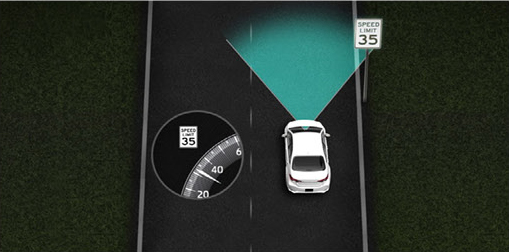
- Cruise and sign recognition: Dynamic Radar Cruise Control, Road Sign Assist, and Automatic High Beams were already built in.
If you are narrowing the decision by vehicle first, the Toyota Model Lineup gives you the quickest view of how these safety suites show up across the brand.

What Toyota Safety Sense 3.0 Actually Changed
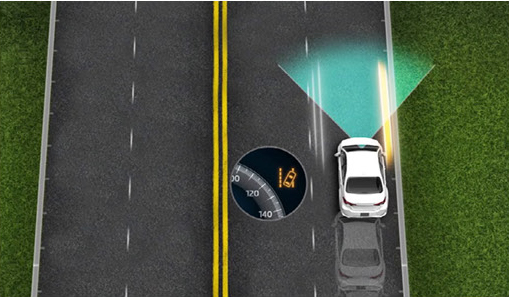
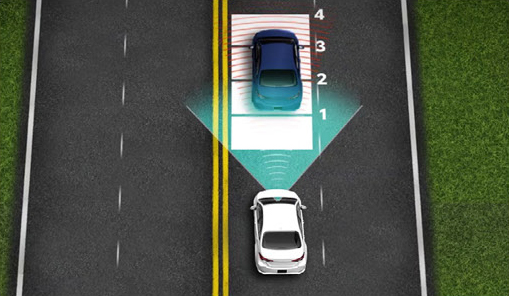
Toyota updated the sensors first, then used that better view of the road to expand what the suite can do.
The biggest TSS 3.0 improvement is not one flashy feature. Toyota says TSS 3.0 uses a higher-resolution, wider-angle forward camera and a radar sensor with a longer and wider field of view, and those hardware changes are what enable the broader improvements in detection and support.
That is why TSS 3.0 feels more polished rather than completely different. The suite does not abandon the 2.5 foundation. It sees more, interprets more, and supports the driver more smoothly in the situations that get messy fast.
Important: Toyota says TSS 3.0 is a driver-assist system, not self-driving technology. The driver remains responsible for paying attention and driving safely.
Why These Changes Matter on Memphis Roads
Poplar Avenue, the Shelby Farms Greenline, and I-240 near the airport make better detection feel more relevant here.
Anyone who makes daily left turns in Memphis traffic knows that safety technology matters most when the scene gets busy. TSS 3.0's added value is easier to appreciate on wide arterials, merges, and bike-adjacent corridors than it is on an empty straight road.
Here is where the difference can feel more useful around Memphis:
- Left turns on Poplar Avenue: TDOT describes Poplar from Highland Street to I-240 as a seven-lane principal arterial with sidewalks, which is exactly the kind of corridor where stronger intersection support matters.
- Cyclist awareness near the Greenline: Shelby Farms says the Greenline is a 12.94-mile trail connecting Midtown Memphis through Shelby Farms Park to Cordova, so better bicycle and motorcycle recognition is not just a theoretical improvement.
- Busy airport-area merging: TDOT says the I-240/Airways interchange handles commuter, airport, and commercial truck traffic, which makes smoother DRCC behavior and better lane recognition more valuable in daily driving.
- Wet-weather traffic: Memphis logged 55 thunderstorm days and 44 heavy-rain days in 2025, so clearer lane reading and calmer support in low-visibility traffic are not hard to justify locally.
Which Toyota Models at Chuck Hutton Toyota Actually Use TSS 3.0 Right Now
The biggest buyer mistake is assuming every 2025 or 2026 Toyota automatically got TSS 3.0.
This is where a lot of shoppers get tripped up. Toyota did not move every model from TSS 2.5 to 3.0 at the same time, which means the safety-suite label is a model-year question, not just a calendar-year question.
Here is the cleaner way to think about it:
- Camry: Toyota says the 2025 Camry came standard with TSS 3.0, and 2026 Camry owner materials continue to show TSS 3.0. If a sedan is your target, Camry is one current example.
- Tacoma: Toyota says all 2024 Tacoma models came standard with TSS 3.0.
- 4Runner: Toyota says all 2025 4Runner models come standard with TSS 3.0.
- Prius and bZ: Current owner materials show Prius and 2026 bZ applications using TSS 3.0.
- RAV4 and Highlander: This is the nuance many pages miss. Toyota says the 2025 RAV4 still uses TSS 2.5, 2025-2026 Highlander uses TSS 2.5+, and 2026 RAV4 moves to TSS 4.0.
That model-by-model verification is the real information gain here. "2025-2026 Toyota" is not a clean shortcut for "TSS 3.0 Toyota."
When Toyota Safety Sense 2.5 Is Still More Than Enough
TSS 2.5 is still modern enough that the whole vehicle often matters more than the suite number alone.
You are not making a weak decision just because a late-model Toyota has TSS 2.5 instead of 3.0. Toyota's own TSS 2.5 overview shows a suite that already covered the major active-safety features most buyers expect, which is why the rest of the vehicle should still carry more weight than the version number by itself.
TSS 2.5 is usually still enough when:
- Your routes are predictable: Mostly suburban commuting and steady highway miles do not always expose the extra edge of 3.0.
- The vehicle fit matters more: Seating position, cabin layout, cargo room, and powertrain affect your daily life more than a safety-suite version change.
- You are value-focused: A late-model Toyota with TSS 2.5 can still feel very current and confidence-building.
- You are shopping slower-transition nameplates: RAV4 and Highlander are the clearest reminders that newer does not always mean TSS 3.0.
If you are considering a late-model Toyota that still checks the right boxes, the Toyota Certified Program Overview is worth reading before you rule a vehicle out just because it does not carry the newer label.
Should TSS Alone Decide Between a 2024 and a 2025-2026 Toyota?
The smarter question is not Which number is newer, but Which whole vehicle fits your daily driving better.
If two Toyotas fit you equally well, TSS 3.0 is a smart tie-breaker. If the vehicles do not fit equally well, the safety-suite version should not overpower the rest of the decision. That is the honest way to use this information.
A practical framework looks like this:
- Put more weight on TSS 3.0 if you spend a lot of time in dense city traffic, make frequent left turns, or drive around cyclist-heavy routes.
- Do not force TSS 3.0 if the older vehicle fits your body style, seating, or daily use better.
- Verify the exact model and year because Toyota's rollout varied by nameplate.
- Use real examples, not assumptions. If you want a current truck example with TSS 3.0, Tacoma is one of the clearest places to start.
That is also why this topic is useful for BOFU buyers. It reduces one of the easiest ways to overthink a purchase: treating one feature label like it should decide the whole vehicle.
Where To Compare Toyota Safety Sense Near Memphis
The most useful test drive includes one busy left turn, one merge, and one stretch of surface-street traffic.
The clearest way to understand TSS 2.5 vs 3.0 is a back-to-back drive on roads that look like your real week, not a short loop with no pressure points. If a truck-based SUV is on your list, 4Runner is one current TSS 3.0 example worth comparing against a late-model Toyota with TSS 2.5 or 2.5+.
Chuck Hutton Toyota is located at 4601 Hutton Way in Memphis, and the sales team can be reached at 901-310-2279. For drivers across Memphis, Southaven, and Olive Branch, the useful next step is not guessing which safety suite "sounds newer." It is verifying the exact model-year pairing, then driving the vehicle on the kind of route you actually use.
Call 901-310-2279 to compare model years and confirm which Toyota Safety Sense suite is on the exact vehicle you want.