


Lease vs. Buy a Toyota: Which Option Makes More Sense for Memphis, TN Drivers?
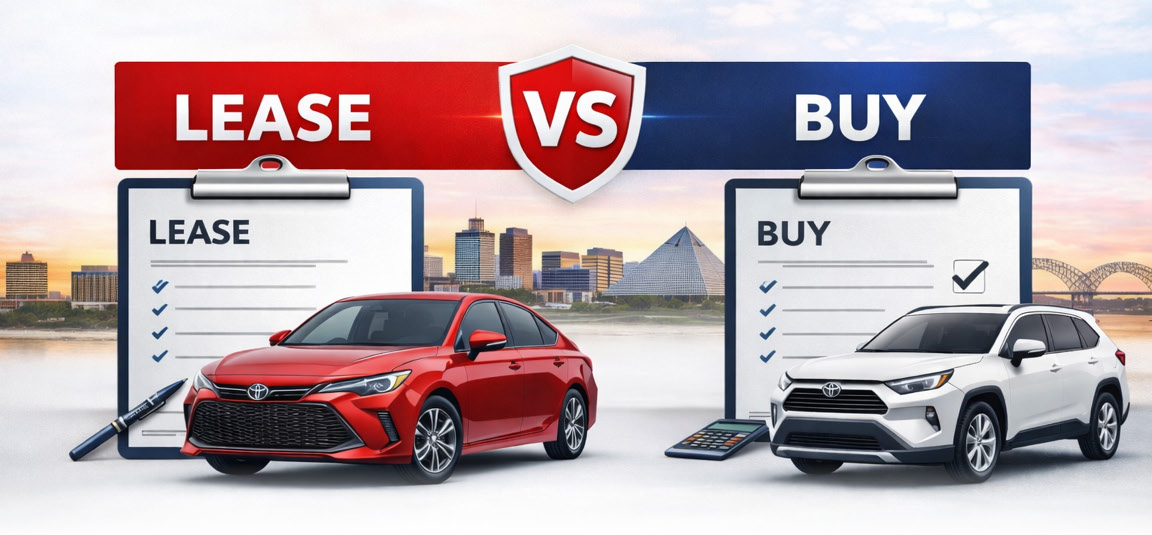
Neither leasing nor buying is universally better. The right answer depends entirely on how you drive, how long you keep vehicles, and what matters most to you financially. That's not a cop-out. It's the reason this guide exists.
Too many lease vs. buy comparisons online oversimplify the decision or push one option. This one won't. Our goal at Chuck Hutton Toyota is to give you enough clarity to walk into that conversation knowing what to ask and what to expect.
Whether you're commuting across the 1-240 loop daily or running weekend errands through East Memphis, the way you use your vehicle should drive this decision, not a generic rule of thumb.
How a Toyota Lease Actually Works: A Plain-Language Breakdown
A lease is a structured agreement where you pay for the portion of the vehicle's value you'll use during the lease term, not the full value. Most lease terms run 24 to 36 months. During that time, your monthly payment covers the vehicle's expected depreciation plus fees. At the end, you return the vehicle and choose your next step.
You can lease a different vehicle, purchase the one you've been driving at a pre-set amount, or simply walk away.
Did you know? Lease payments are generally based on the gap between the vehicle's current value and its projected value at lease end. Toyota vehicles tend to hold their value well, which means that gap is often smaller than it is with other brands. That's one of the reasons Toyota is consistently among the most-leased brands in the country.
One important detail: leases include mileage limits. If you exceed them, per-mile fees apply when you return the vehicle. Understanding your real annual mileage before signing is essential.


How Buying and Financing a Toyota Works
When you finance a vehicle, you're paying off its full value through a loan over a set period, typically 48 to 72 months. Once the loan is complete, the vehicle is yours with no further payments.
Monthly payments when financing are higher than lease payments for the same vehicle. But here's the tradeoff: once that loan is paid off, your monthly cost drops to zero.
You own an asset. You can drive it another five years payment-free if you choose to.
There are no mileage restrictions. You can customize, modify, or accessorize however you want. And you decide when to sell or trade, on your own timeline.
For drivers who keep their vehicles long-term, buying typically results in a lower total cost over time, even though the monthly payment is higher during the loan period.
This is where Toyota's reputation for long-term reliability becomes a real financial advantage. A well-maintained Toyota that runs strong at 150,000 miles turns those post-loan years into genuinely low-cost ownership.
When Leasing a Toyota Makes the Most Sense for Memphis Drivers
Leasing isn't for everyone, but for certain driving profiles, it's the clearly better fit. You might lean toward leasing if you prefer driving a new vehicle every two to three years. This keeps you in the latest safety technology and features without the hassle of selling or trading. If staying current with the newest version of a vehicle like the RAV4 matters to you, leasing makes that cycle seamless.
Leasing also fits drivers who want a lower monthly payment on a well-equipped vehicle. Instead of stretching a loan to 72 months to bring the payment down, a lease accomplishes a similar monthly figure over a shorter commitment. Here's a real scenario to consider. If you commute from Southaven to downtown Memphis via 1-55, that's roughly 40 miles round trip per day. Over 250 work days, that alone puts you above 10,000 miles per year before any weekend driving.
If your total annual mileage stays within the lease terms, leasing works. If it doesn't, the per-mile overage fees can shift the math quickly. Know your mileage before you commit.
There are two other lease details worth understanding upfront. First, leased vehicles typically require higher insurance coverage than financed ones. Your insurance premiums may be slightly higher, so factor that into your monthly budget.
Second, when you return a leased vehicle, it will be inspected for excess wear and tear beyond normal use. Keeping the vehicle in good condition throughout the lease avoids any surprise charges at the end.
Leasing also offers flexibility if your life is in transition. New job, growing family, or a potential relocation? A two-to-three year lease means you're not locked into a vehicle for the next decade.


When Buying a Toyota Is the Smarter Long-Term Move
Buying makes the most financial sense when you plan to keep your vehicle well past the loan payoff date. That's when the real savings kick in. Here's how to think about it. During the loan, your monthly payment is higher than a lease on the same vehicle. But once that loan is done, every month of driving is essentially free, minus routine maintenance and fuel.
A driver who purchases a Camry and keeps it for eight to ten years will spend significantly less overall than a driver who leases three vehicles over the same timeframe.
Buying is also the clear winner for high-mileage drivers. If you're logging 18,000 to 25,000 miles per year, whether from a long daily commute across Memphis or work that keeps you on the road throughout the week, a lease's mileage cap will penalize you. If you plan to keep your Toyota for five years or more, buying almost always works out better on total cost. The longer you keep it, the wider the gap.
And for the truck community in the Mid-South, buying is the only real option if you want to add lift kits, custom wheels, bed liners, or aftermarket accessories. Whether it's a Tacoma built for weekend trail runs or a 4Runner set up for off-road adventures, lease agreements restrict modifications. There's also an equity factor that's easy to overlook. Every payment you make on a financed vehicle builds ownership in an asset.
When you're ready for your next Toyota, that equity becomes real trade-in value. With leasing, every payment is gone at the end of the term. Neither approach is wrong, but knowing which one aligns with your financial goals matters.


Why Toyota Stands Out in Both the Lease and Buy Equation
Here's where brand matters more than most people realize. For leasing, the math is directly tied to how well a vehicle holds its value. The less a vehicle depreciates during the lease term, the less you pay. Toyota consistently leads the industry in retained value, which means the depreciation you're paying for is often smaller than it would be with other makes.
For buying, the advantage shifts to reliability and long-term durability. Toyota has built a reputation for vehicles that last well beyond 200,000 miles. That kind of durability turns those post-loan years into genuine, low-cost driving with minimal surprises.
That dual advantage, strong lease terms from high resale value and strong ownership value from long-term durability, is something very few brands can genuinely claim.
A Quick Way to Figure Out Which Option Fits You
If the sections above haven't made it obvious yet, here's a faster way to think about it. Answer these three questions honestly.
How long do you typically keep a vehicle? If the answer is three years or less, leasing is almost certainly the better fit. If it's five years or more, buying usually wins on total cost.
How many miles do you drive per year? Calculate your actual mileage, not your estimate. If you're consistently under 12,000 to 15,000 miles, leasing remains on the table. If you're above that, buying removes the mileage penalty entirely.
What matters more to you right now: a lower monthly payment or long-term savings? Both are valid priorities. A lease gets you into a well-equipped vehicle at a lower monthly cost. Financing costs more per month but delivers greater value over time, especially after the loan ends.
If you answered "short-term, low mileage, lower monthly cost," lean toward leasing. If you answered "long-term, high mileage, total savings," lean toward buying. If your answers are mixed, that's exactly when a personalized comparison from the finance team makes the biggest difference.
What Southaven and Olive Branch Drivers Should Know Before Deciding
If you live in DeSoto County, there's an additional factor to weigh. Mississippi charges an annual ad valorem tax on vehicles. This is a yearly cost based on the vehicle's assessed value, and it applies whether you lease or buy. The assessed value decreases with the vehicle's age, so the tax goes down over time for buyers. For lessees who turn over to a new vehicle every two to three years, the tax resets to the higher value each cycle.
This doesn't automatically tip the scale toward buying, but it's a real cost that should be part of your calculation. The finance team at Chuck Hutton Toyota works with DeSoto County residents regularly and can walk you through how this applies to your specific situation.
This is also worth noting for drivers in Olive Branch who commute through the Goodman Road corridor or hop on 1-55 north. Your annual mileage in that commute pattern matters just as much as the tax consideration when choosing between lease and buy.
It depends entirely on your situation. Leasing works well for drivers who want lower monthly payments and prefer a new vehicle every few years. Buying tends to be better for those who keep vehicles long-term and want zero payments after the loan ends. A personalized comparison is the fastest way to see which option saves you more.
Most Toyota leases offer annual mileage options of 10,000, 12,000, or 15,000 miles per year. If you exceed the chosen limit, per-mile fees apply when you return the vehicle. Memphis-area commuters should calculate their real annual mileage, including the daily 1-240 or 1-55 commute plus weekend driving, before signing.
Yes. Mississippi's annual ad valorem tax applies to vehicles regardless of whether they are leased or purchased. The tax is based on the vehicle's assessed value and varies by county. Residents in Southaven and Olive Branch should factor this recurring annual cost into their overall comparison.
Yes. At the end of a Toyota lease, you have three options: purchase the vehicle at a pre-set amount, start a new lease on a different Toyota, or return the vehicle and walk away. This flexibility is one of leasing's advantages, giving you options no matter how your driving needs have shifted.
See Both Options Side by Side With a Team That Knows the Difference
The best way to make this decision is to see the actual numbers for the specific vehicle you're considering. Not a generic comparison, but your comparison, based on your mileage, your timeline, and your priorities.
More Memphis-area drivers have chosen Chuck Hutton Toyota than any other Toyota dealer in the region for three consecutive years. That kind of volume means our finance team has walked hundreds of drivers through this exact lease vs. buy conversation, and they know how to frame it around your real life, not a textbook.
You can schedule a test drive and let the conversation happen in person. Either way, the goal is the same: helping you leave with the right vehicle on the right terms.