


When Is the Best Time to Trade In Your Car? Timing Strategies for Memphis, TN Drivers

When Is the Best Time to Trade In Your Car?
Timing Strategies for Memphis, TN Drivers
Your car’s trade-in value doesn’t drop at a steady pace. It falls in steps, and the best time to trade in your car depends on which step you’re standing on right now.
Most drivers in Memphis already know they want to trade in. The question that keeps them waiting is whether next month or next season is the smarter move.
Here’s what most people miss: the used vehicle market rewards strategic timing. A few weeks can make a real difference, whether you’re putting daily miles on I-240 or commuting across the state line from DeSoto County.
This guide from Chuck Hutton Toyota breaks down five timing signals that actually move value, so you can stop guessing and start planning.
Which Trade-In Timing Window Matches Your Driving Life in Memphis, TN?
Not every driver is working with the same timeline. Your ideal window depends on how fast you’re adding miles, what type of vehicle you drive, and what season you’re in.
Here’s a quick way to find your starting point.
| Your Situation | Best Timing Window | Why It Matters |
|---|---|---|
| Approaching a major mileage marker | Before crossing the threshold | Value drops at key odometer milestones |
| Own a truck or SUV | Spring through early summer | Seasonal demand peaks in the Mid-South |
| Your model was recently redesigned | Before the new version floods the market | Outgoing designs lose ground quickly |
| Vehicle is 4–6 years old | Sooner rather than later | Age compounds every other factor |
Here’s a fun fact: Mississippi ranks among the highest-mileage states in the country. Drivers there average over 20,000 miles per year, according to Federal Highway Administration data.
If you’re commuting from Southaven or Olive Branch, your timing window may be tighter than you think.
Drivers who are already considering what comes next can browse new inventory while evaluating their current vehicle’s position in these windows.


The Mileage Markers That Shift Trade-In Value in the Mid-South
The used vehicle market treats certain odometer readings like cliffs. Crossing 30,000, 60,000, 80,000, or 100,000 miles triggers a noticeable shift in how buyers perceive your vehicle.
A vehicle at 59,500 miles commands a different value than one at 61,200. The mechanical difference is negligible, but buyer psychology is real.
If your odometer is within 2,000 miles of a major marker, that’s your signal to get appraised now, not next month.
This matters especially for high-mileage Mid-South commuters. If your daily round trip puts 50 or 60 miles on the odometer, those thresholds arrive faster than you’d expect.
The same goes for professionals making the I-55 commute from Olive Branch or the Goodman Road corridor through Southaven. At 15,000 to 20,000 miles per year, you could cross a key threshold without realizing it.
Did you know? The 60,000-mile mark is one of the most impactful in the used market. It’s the point where many buyers start to question long-term reliability, even on a well-maintained vehicle.
Trading in before that number shows on the odometer keeps you on the stronger side of the value curve.
You can value your trade online to see where you stand before coming in.
Seasonal Demand Patterns That Move the Memphis Market
The Mid-South has its own rhythm, and it’s different from national averages. Truck and SUV demand climbs from March through August as local buyers prepare for outdoor season.
Fishing at Sardis Lake, weekend trips to Pickwick Landing, and hauling gear across West Tennessee all drive that spring surge. If you’re trading in a truck or SUV, spring is your strongest window.
Sedan and fuel-efficient vehicle demand tends to follow gas prices, which historically spike in late spring and summer. All-wheel-drive and four-wheel-drive vehicles see elevated interest in late fall.
That’s when Mid-South drivers start preparing for ice season and those unpredictable freezing rain events that turn the I-240 loop into a slow crawl.
| Vehicle Type | Strongest Window | What Drives the Demand |
|---|---|---|
| Trucks and full-size SUVs | March through August | Outdoor season, towing, recreation |
| Sedans and Hybrids | Late spring and summer | Fuel economy becomes a priority |
| AWD/4WD vehicles | October through December | Winter weather prep across the region |
The pattern is straightforward: trade into rising demand. A Tacoma traded in during April carries more market momentum than the same truck in November.
How Model-Year Redesigns Affect Your Toyota’s Trade-In Timing
When a newer version of your vehicle hits dealer lots, the used market adjusts. This is normal and predictable, but it catches owners off guard.
Most Toyota model-year transitions happen in late summer through fall. Trading in before the updated version of your vehicle becomes widely available helps preserve value.
Here’s where it gets interesting. The effect is amplified during complete generational redesigns, not simple year-over-year refreshes.
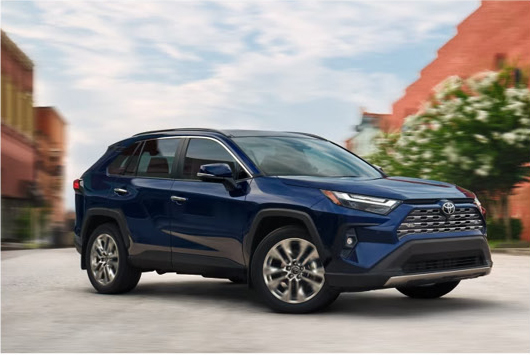
The sixth-generation 2026 RAV4 is a ground-up overhaul. It moved to hybrid-only powertrains and introduced Toyota Safety Sense™ 4.0. Owners of 2019 through 2024 fifth-generation RAV4 models should factor this shift into their timeline.
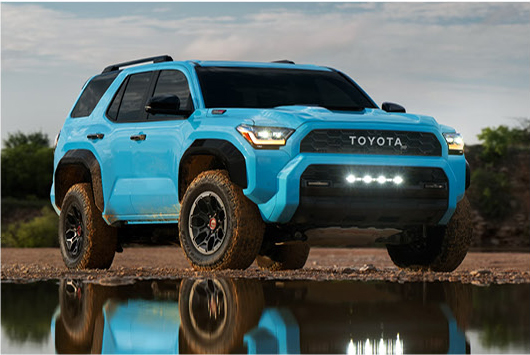
The same applies to the 4Runner. Its sixth-generation 2025 redesign introduced new turbocharged engines and a completely rethought interior. It was the first 4Runner overhaul in over 14 years.
A complete redesign creates a wider value gap than a refresh. Knowing when your model’s next major update arrives is one of the most actionable timing signals.
Did you know? The RAV4 has been America’s best-selling compact SUV for years, with over 475,000 units sold in 2024 alone. When a vehicle that popular gets redesigned, the ripple through the used market is significant.
Our Toyota specialists track these cycles closely and can help you identify where your specific model sits.
The “Vehicle Age and Condition” Timing Signals Most Owners Overlook
Beyond mileage and seasonality, your vehicle’s age and overall condition create timing signals that are easy to miss. Here’s what to watch for.
The used market places a premium on newer vehicles with documented maintenance history. A well-maintained three-year-old Toyota is in a different category than a six-year-old one, even at similar mileage.
- Vehicles under five years old tend to hold a stronger position in the used market, as they’re still considered “late model”
- A complete service history builds buyer confidence and can positively influence your appraisal
- Cosmetic condition matters more than most owners expect; minor dents and interior wear factor into how a vehicle is valued
- Vehicles with in-demand features like Toyota Safety Sense™, adaptive cruise, and Apple CarPlay® compatibility hold value better than base trims
- If your vehicle qualifies for a certified pre-owned program, that can increase what a dealer is willing to offer
The combination of low mileage, recent model year, and clean history creates the strongest trade-in position. Each factor you lose narrows the window.
Think of it as a scorecard. The more boxes your vehicle checks, the more leverage you carry into the conversation.

Market Conditions You Can Watch Without Becoming an Analyst
Used vehicle values respond to supply and demand. You don’t need to track economic data daily to use this to your advantage.
A few simple signals can tell you whether the current market favors sellers or buyers.
When new vehicle inventory is limited, used vehicle values climb. When inventory returns to normal levels, used values level off or soften. Interest rate shifts also play a role; lower rates bring more buyers into the market and support trade-in values.
Here’s the simplest test: browse used vehicle listings for your make and model online. If prices seem higher than you expected, the trade-in market is likely strong too. If listings are sitting with reductions, the market may be cooling.
Our team at Chuck Hutton Toyota tracks these conditions closely. A quick conversation can help you understand whether the current market is working in your favor. Drivers across Memphis, Cordova, Germantown, and East Memphis have trusted our guidance on exactly this kind of decision for years.

When Perfect Timing Isn’t an Option, Smart Timing Still Is
Look, not everyone has six months to plan their trade-in. Maybe a repair bill just changed the math. Maybe your family outgrew a sedan.
Or maybe your Germantown-to-downtown commute just became a Collierville-to-Southaven run, and your vehicle no longer fits the job.
The strategies in this guide are tools for optimization, not reasons to delay a necessary decision. The best time to trade in is when your situation calls for it.
The goal is simply to make the most of whatever timeline you’re working with. Even small adjustments, like trading in before crossing 60,000 miles instead of after, can shift the outcome.
Your Next Move Starts With Knowing Where You Stand
Every timing signal in this guide points to the same conclusion: knowing your vehicle’s current value is the first step toward making a smart decision.
If your situation says it’s time, then it’s time. If you have flexibility to choose your window, these signals can help you capture more value.
Whether you’re planning ahead or ready to move today, our team is here to walk you through the process. You can start online or schedule a test drive of your next vehicle while we evaluate your current one. Drivers from across Memphis, Southaven, and Olive Branch have made this their first stop for years, and there’s a reason they keep coming back.